Attraction
Cozumel
Lying approximately 19 km off the eastern coast of the Yucatán Peninsula, Isla Cozumel is Mexico's premier diving destination and one of the most celebrated underwater environments in the world. Its name comes from the Maya word Cuzamil, meaning "Land of the Swallows" — a gentle nod to the natural richness that defined this island long before the modern world took notice.
That modern discovery has a precise moment: in 1961, legendary ocean explorer Jacques Cousteau was guided by local fishermen to the island's reefs and revealed their staggering beauty to the world for the first time. What he found was extraordinary — water with visibility exceeding 30 meters, over 65 coral reefs, and a marine biodiversity unlike almost anywhere else on Earth. Cousteau declared it one of the finest diving areas in the world, and the island has never looked back. The reef system surrounding Cozumel is the second largest in the world, surpassed only by Australia's Great Barrier Reef, and it shelters an astonishing cast of marine life: spotted eagle rays, moray eels, barracudas, sea turtles, nurse sharks, groupers, brain corals, and enormous sea sponges.
Diving at Cozumel is done primarily in drift style — divers allow themselves to be carried by the strong currents that sweep along the reefs, the very same currents responsible for the reef's extraordinary size and health. Among the most iconic dive sites are Palancar Reef, famous for its dramatic caves and canyons, Santa Rosa Wall, celebrated for its depth and spectacular marine life, and San Francisco Reef, with its shallower drop-off ideal for less experienced divers. With over 50 dive operators on the island, logistics could not be simpler.
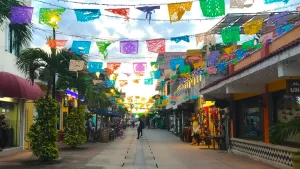
But Cozumel is far more than its reefs. On land, the island's only town — San Miguel de Cozumel — offers a laid-back, charming atmosphere centered around the seafront Malecón and the central plaza. The Cozumel Island Museum traces the island's Maya heritage, the arrival of the Spanish, and the era of pirates — among them Jean Lafitte and Henry Morgan, who once used the island's coves as a hiding place. In the interior, the Maya ruins of San Gervasio mark what is believed to have been the sanctuary of Ixchel, goddess of fertility, a major pilgrimage site in the pre-Columbian world. At the island's southern tip, Parque Punta Sur protects a remarkable stretch of coastline with mangrove lagoons, turtle nesting beaches, flamingos, and crocodiles. The wild eastern shore, battered by open Caribbean winds, offers dramatic seascapes and secluded beaches that feel a world apart from the calm, hotel-lined western coast.
Cozumel can be visited as a standalone destination or as a day trip from Playa del Carmen, connected to the mainland by a fast passenger ferry that makes the crossing in roughly 45 minutes. It is an island that suits families, couples, and nature lovers equally well — one that, despite its popularity, has managed to preserve the easygoing, unhurried character that has made it a favourite for decades.
Things to Do in Cozumel
Attraction
Cozumel Reef Snorkeling Tour
Attraction
Cozumel Snorkeling Tour
Attraction
Playa El Cielo
Attraction
Cozumel Jeep Island Tour
Attraction
Cozumel ATV Jungle Tour
Attraction
Playa Mia
Attraction
Cozumel Downtown Area
Attraction
Playa Passion Island
Attraction
Playa Palancar
Attraction
Paradise Beach Cozumel
Attraction
Sky Reef Beach
Frequently Asked Questions about Cozumel Downtown Area
Is Cozumel a good destination for scuba diving?
Cozumel is widely considered the number one dive destination in the Western Hemisphere and one of the top five in the world. The island is surrounded by over 65 coral reefs with year-round visibility commonly exceeding 30 meters, and its waters are home to an extraordinary variety of marine life including spotted eagle rays, moray eels, sea turtles, barracudas, sharks, and enormous sea sponges. Diving here is done primarily in drift style, carried by the same strong currents that have made the reefs so rich and expansive. With more than 50 dive operators on the island catering to all experience levels, it is one of the easiest and most rewarding places in the world to get underwater.
What are the best reef sites to visit in Cozumel?
Cozumel offers a wide range of reef sites to suit divers and snorkelers of every level. Palancar Reef is perhaps the most iconic — a dramatic underwater landscape of caves, canyons, and towering coral formations teeming with fish. Santa Rosa Wall is celebrated for its sheer depth and the density of sea life along its face. San Francisco Reef offers a shallower drop-off, making it more accessible for less experienced divers. For snorkelers, Paraíso Reef and Chankanaab are excellent choices, with spectacular coral and colorful fish clearly visible just below the surface.
Is there anything to do in Cozumel beyond diving and snorkeling?
Absolutely. On land, the island's only town, San Miguel de Cozumel, has a charming, laid-back atmosphere with a lively waterfront, good restaurants, and a well-regarded museum that covers the island's Maya heritage, the arrival of the Spanish, and the pirate era. In the interior, the Maya ruins of San Gervasio — believed to have been the sanctuary of Ixchel, goddess of fertility — are worth a visit. At the island's southern tip, Parque Punta Sur is a remarkable natural reserve with mangrove lagoons, crocodiles, flamingos, turtle nesting beaches, and a historic lighthouse. The wild eastern coast, largely untouched by tourism, offers dramatic scenery and secluded beaches perfect for an afternoon picnic.
How do you get to Cozumel and how easy is it to get around?
Cozumel is easily reached either by air, with direct international flights to its small and straightforward airport, or by passenger ferry from Playa del Carmen, with crossings taking approximately 45 minutes. Getting around the island itself is simple — the layout is easy to understand, with one main road circling most of the coastline. Renting a car, scooter, or golf cart is the most popular and flexible way to explore, though taxis are also widely available. The island is compact enough that most key attractions, beaches, and dive sites are reachable within a short drive from San Miguel.