Coba Ruins
Coba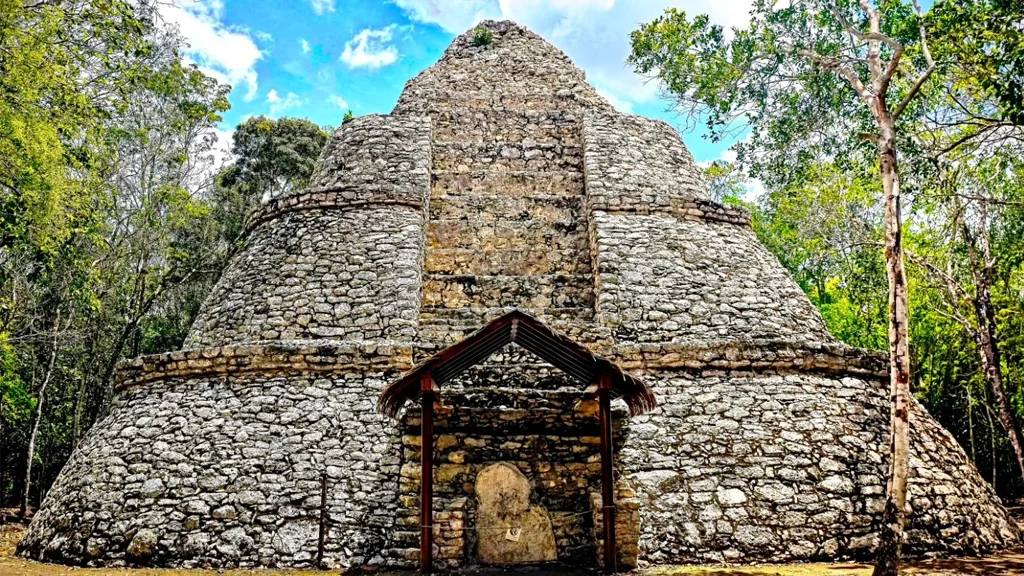
How to get to Coba Ruins
Cobá is easiest by rental car, private transfer, or guided tour from Tulum or Playa del Carmen.
About Coba Ruins
Cobá is an ancient Maya city set in the jungle interior of Quintana Roo, about 40 kilometers northwest of Tulum. It is one of the largest archaeological zones in the Yucatán Peninsula, covering approximately 70 square kilometers of mature tropical forest, though only a fraction of an estimated 6,500 structures have been excavated and restored.
What distinguishes Cobá most immediately from other major Maya sites is its setting. While Chichen Itza is open to the sky on a broad plain and Tulum is compact and coastal, Cobá sits within a dense jungle where the paths between structures wind through forest canopy and birdsong. Moving through the site feels like genuine exploration. Bicycles and tricycle taxis are available at the entrance — a practical necessity, as the main structures are spread across considerable distances that would take much longer to cover on foot.
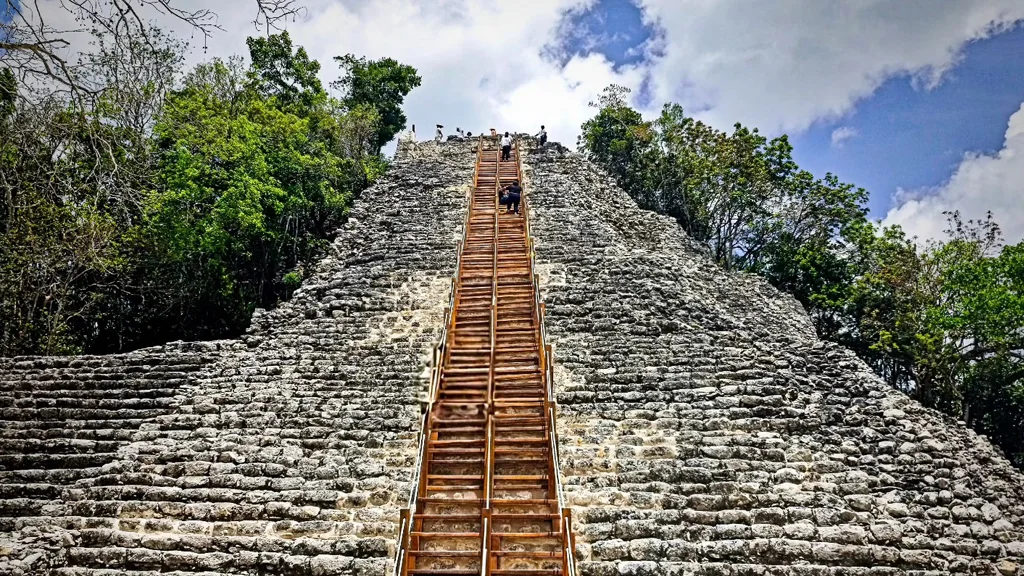
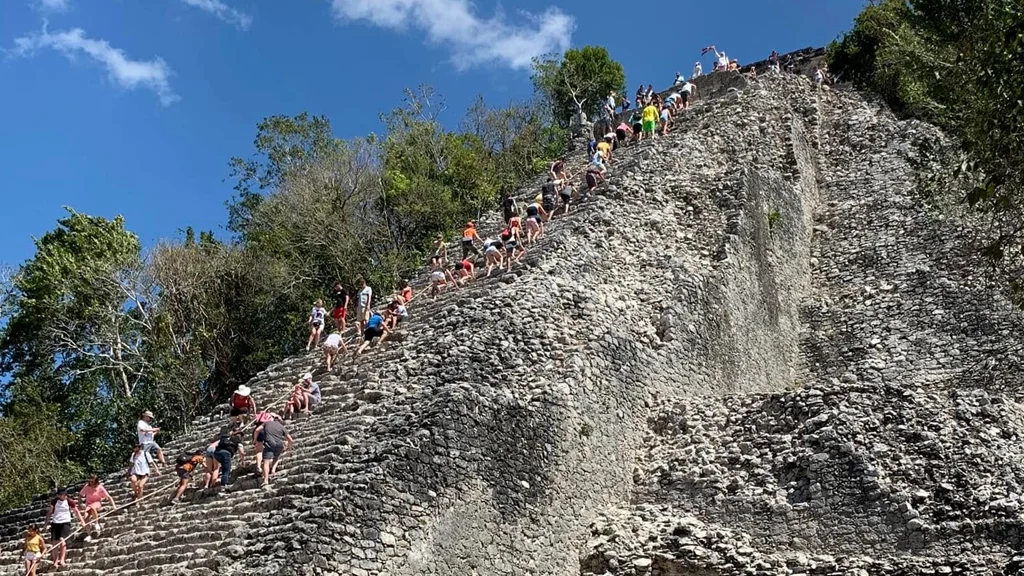
The main attraction at Cobá is Nohoch Mul, the Great Pyramid — the second-tallest Maya structure on the Yucatán Peninsula at 42 meters. It is one of the very few major Maya pyramids in Mexico where climbing has historically remained permitted, though this policy can change and should be verified before visiting. The view from the top over an unbroken flat jungle canopy stretching to the horizon is among the most expansive in the entire region and unlike anything achievable at Chichen Itza or Tulum.
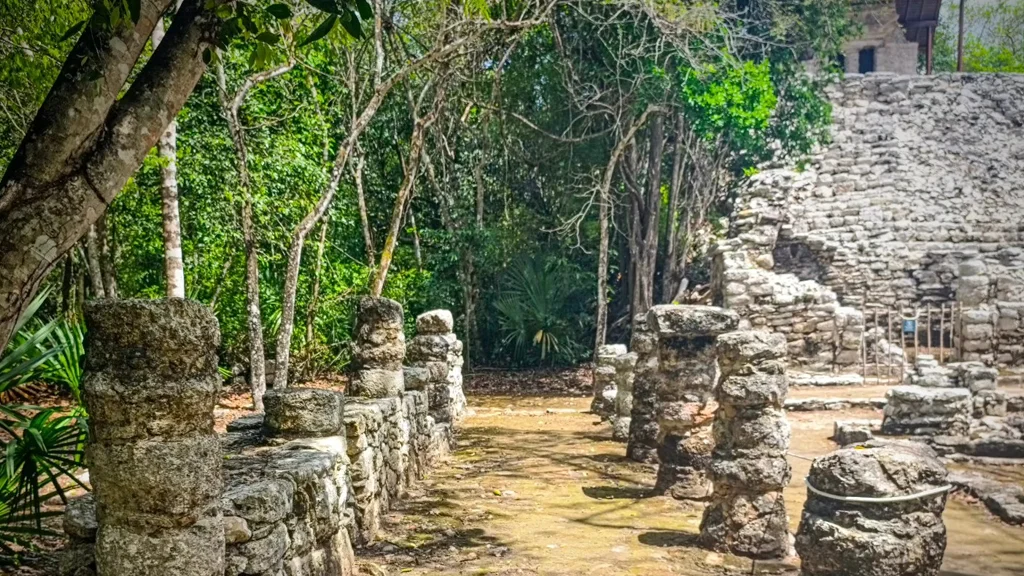
The site also contains a network of sacbeob — raised limestone causeways that once connected Cobá to other Maya cities across the peninsula, including a remarkable causeway extending more than 100 kilometers to Yaxuná. Cobá was a major regional power between roughly AD 600 and AD 900, and the scale of its sacbeob network reflects that status. The jungle setting, the climb, and the sense of a genuinely large city still mostly hidden beneath the forest make Cobá one of the most compelling ruin visits in the Yucatán.
Video: Coba Ruins
Location
Related Attractions
Frequently Asked Questions about Coba Ruins
Can you still climb the pyramid at Cobá?
Nohoch Mul, the Great Pyramid at Cobá, has historically been one of the very few major Maya pyramids in Mexico where climbing remained permitted. However, this policy is subject to change and should always be verified before visiting, as restrictions at Mexican archaeological sites can be updated by the responsible national institute at any time. When climbing is allowed, the ascent involves steep ancient stone steps with a rope along the center for support. The view from the top is extraordinary — an unbroken expanse of flat jungle canopy in every direction, one of the most expansive vantage points in the Yucatán. Even if future restrictions prohibit climbing, the pyramid and the jungle setting make Cobá well worth visiting.
How is Cobá different from Chichen Itza or Tulum?
Cobá offers an experience distinctly different from both. Chichen Itza is a largely open-air site with massive visitor numbers and a highly managed flow. Tulum is compact, coastal, and also heavily visited. Cobá sits within dense tropical jungle, covering a very large area where structures are reached by bike or on foot through forest paths. Moving through Cobá feels like genuine exploration — with wildlife overhead, thick vegetation on both sides, and a sense of an ancient city still partly hidden beneath the jungle. The ability to climb the main pyramid (when permitted) adds a physical dimension absent at both Chichen Itza and Tulum.
How long does it take to visit Cobá?
Most visitors spend two to three hours, which is enough to reach the main pyramid, see the ball court and structures near the entrance, and cover the key areas by bicycle. If you want to explore less-visited sections like the Conjunto de las Pinturas, allow three to four hours. Without a bicycle, walking the full extent of the main paths takes considerably longer and becomes tiring in the heat. Arriving early is strongly recommended to avoid both the growing crowds and the worst of the midday heat on the open paths between structures.
Should you rent a bike at Cobá?
Yes — renting a bicycle at Cobá is strongly recommended. The site covers a large area and the main structures are separated by substantial distances along jungle paths. Walking between all the key points is possible but time-consuming and tiring, especially in the heat. Bicycle rental is available at the entrance for a modest fee, and you can ride freely between structures along the designated paths. Tricycle taxis with a driver are available for those who prefer not to cycle. Either option makes the visit significantly more comfortable and efficient.
How do you get to Cobá from Tulum or Cancun?
Cobá is approximately 40 kilometers northwest of Tulum and about 110 kilometers from Cancun. From Tulum, the drive along a well-maintained road through jungle takes about 45 minutes. From Cancun, the route goes via Highway 307 south and then inland through Tulum, totaling around two to two and a half hours. ADO buses run between Cancun and Cobá via Tulum. Many visitors combine Cobá with Tulum Ruins or a nearby cenote — the Gran Cenote is conveniently on the road between Tulum town and Cobá and makes a natural addition to the day.
What wildlife can you see at Cobá?
Cobá's jungle setting provides wildlife encounters in a way that open ruin sites cannot. Birds are abundant throughout, and the canopy hosts toucans, parrots, and various tropical species audible from the paths. Coatis — small, raccoon-like mammals with long curved snouts — are common around the site and are accustomed to visitors, often appearing near the entrance and along paths. Iguanas are present on warm stone surfaces throughout the ruins. Howler monkeys inhabit the surrounding jungle and can sometimes be heard roaring from the canopy even when not visible. The jungle itself is as much a part of the Cobá experience as the ruins.
Rating Overview
No reviews yet. Be the first to leave a review!
Leave a Reply